

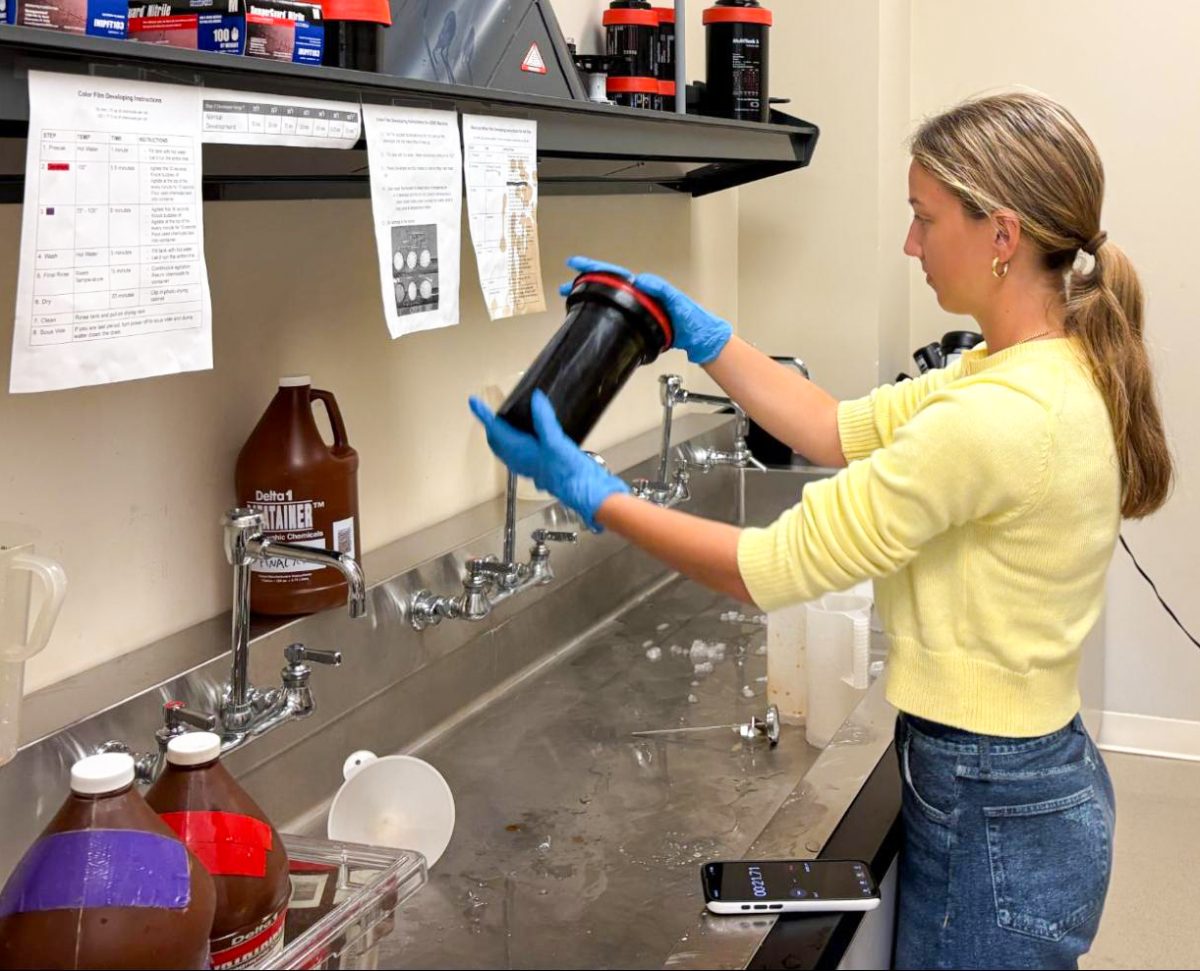
Photography students stand shoulder to shoulder in a nearly pitch-black room, guiding sheets of light-sensitive paper through trays of developer, stop bath and fixer.
The process is slow and methodical. It requires precision, patience and, often, a tolerance for the smell of chemicals.
For many schools, that process has been replaced by the immediacy of digital photography.
In a blog discussing the rise of smartphone cameras, The Guardian wrote, “Photography has never been so popular, but it’s getting destroyed,” pointing to the tension between accessibility and artistry in the digital age.
At The Kinkaid School, photography teacher Mrs. Bess Connell said the shift away from film is often driven by financial realities rather than a lack of interest.
“I would say for lots of schools, they don’t necessarily offer working with film as an option anymore,” Mrs. Connell said. “I don’t think it’s a dying art. I think mostly what it comes down to is the cost of the programs is so expensive that a lot of places can’t afford to run a dark room anymore. And so the school just gets rid of it, especially as digital cameras are more accessible.”
Maintaining a darkroom has required specialized equipment, chemical supplies and dedicated space resources that many schools have reallocated to digital programs. Digital cameras and editing software have allowed students to review and adjust their work instantly, reducing material costs and turnaround time.
Yet film photography has not disappeared. Instead, Mrs. Connell said, it is experiencing renewed interest.
“There seems to be a popular surge of people going back to film and using it more,” Mrs. Connell said. “Kind of like people wanting to go to analog and listen to albums instead of listening to music through Spotify.”
That resurgence has translated into student engagement and competitive success.
Kinkaid photography students have regularly submitted their work to regional and national contests, including the Scholastic Art & Writing Awards and the Association of Texas Photography Instructors.
“We’ve had lots of students win Gold Keys through the Scholastic Art and Writing Awards, as well as the Association of Texas Photography Instructors,” Mrs. Connell said. “Scholastic competes regionally first with the city of Houston and then it’s national.”